

14/08/2026
Resources
Understanding the French Payslip: A Complete Guide for Employees and Employers
6 minutes
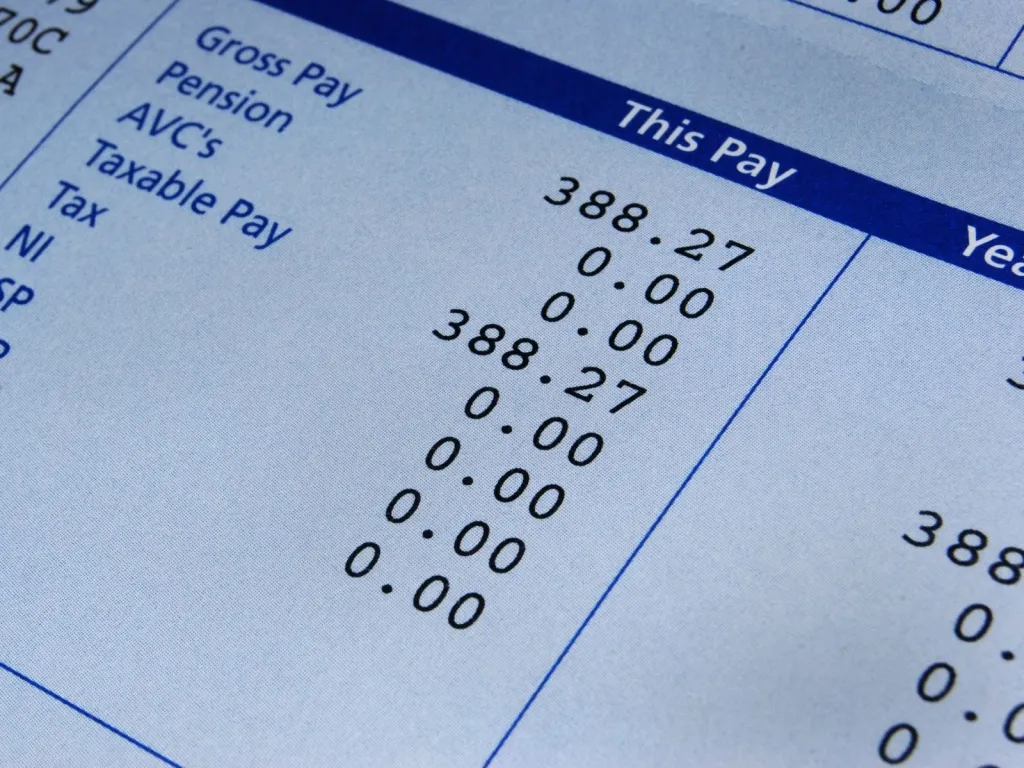

If you have ever worked in France, you have likely received a document known as a bulletin de paie (payslip). While it may appear complex at first glance, the French payslip contains essential information about your salary, social security contributions, taxes, and employment status. Understanding what each section means can help employees verify their compensation and better understand how the French social protection system works.
What Is a French Payslip?
A French payslip is an official document provided by an employer each time an employee is paid. It summarizes the employee's earnings, deductions, social contributions, and the final amount received.
French employers are legally required to issue a payslip, whether in paper or electronic format. The document serves as proof of employment, income, and social security contributions, making it important for various administrative procedures, such as applying for a mortgage, renting accommodation, or claiming social benefits.
Key Information Found on a French Payslip
Employer Information
At the top of the payslip, you will typically find details about the employer, including:
- Company name
- Registered address
- SIRET number (French business identification number)
- APE/NAF code (business activity classification)
- URSSAF registration information
This section identifies the company responsible for issuing the payslip and paying social contributions.
Employee Information
The payslip also contains details about the employee, such as:
- Full name
- Job title or position
- Employee identification number
- Social Security number (partially masked in some cases)
- Collective bargaining agreement (Convention Collective) applicable to the employee
- Employment classification or grade
This information ensures that the payroll calculations correspond to the correct employee and role.
Pay Period and Working Time
A French payslip specifies the period covered by the salary payment, typically a calendar month.
It may include:
- Number of hours worked
- Contractual working hours
- Overtime hours
- Absences (paid or unpaid)
- Paid leave taken during the period
For hourly employees, the payslip provides a detailed breakdown of hours worked and corresponding rates of pay.
Gross Salary (Salaire Brut)
One of the most important figures on the payslip is the gross salary.
The gross salary consists of:
- Basic monthly salary
- Overtime payments
- Bonuses and incentives
- Allowances
- Benefits in kind (company car, housing, etc.)
For example:
Base Salary: €3,000
Performance Bonus: €300
Overtime: €150
--------------------------
Gross Salary: €3,450
The gross salary represents earnings before deductions and social contributions are applied.
Social Security Contributions
A unique feature of the French payroll system is the significant role of social contributions.
These contributions fund:
- Health insurance
- Retirement pensions
- Unemployment insurance
- Family benefits
- Workplace accident coverage
- Additional pension schemes
On modern French payslips, contributions are often grouped into categories for easier reading.
The contributions are divided between:
Employee Contributions
These are deducted directly from the employee's salary.
Examples include:
- Complementary pension contributions
- Health insurance contributions (where applicable)
- Social contributions such as CSG and CRDS
Employer Contributions
These are additional amounts paid by the employer and are not deducted from the employee's salary.
The payslip often displays these contributions to show the overall employment cost borne by the employer.
Net Salary Before Tax
After employee social contributions are deducted from the gross salary, the employee obtains the Net Salary Before Income Tax.
This amount reflects earnings after social charges but before the withholding of personal income tax.
Income Tax Withholding (Prélèvement à la Source)
Since January 2019, France has applied a Pay-As-You-Earn (PAYE) system known as Prélèvement à la Source.
The payslip usually displays:
- Taxable net income
- Income tax rate applied
- Amount of tax withheld
For example:
Net Salary Before Tax: €2,700
Tax Rate: 5%
Tax Withheld: €135
The tax amount is deducted directly by the employer and remitted to the French tax authorities.
Net Salary Payable
This is the figure that most employees focus on: Net Salary Paid (Net à Payer).
It represents the final amount transferred to the employee's bank account after all deductions, including income tax.
Example:
Gross Salary: €3,450
Employee Contributions: -€615
Net Before Tax: €2,835
Income Tax: -€135
------------------------------
Net Pay: €2,700
Net Social Amount (Montant Net Social)
A relatively recent addition to French payslips is the Montant Net Social.
This amount is used as a reference for certain social benefits and administrative declarations.
It provides a standardized figure that individuals can report when applying for benefits such as:
- RSA (Revenu de Solidarité Active)
- Prime d'Activité
The introduction of this amount helps simplify interactions with public administrations.
Paid Leave Information
French payslips generally include information regarding annual leave entitlements.
You may see:
- Paid leave accrued
- Paid leave taken
- Remaining leave balance
Many employers also display balances for:
- RTT days (Reduction of Working Time)
- Time savings accounts (CET)
- Other leave entitlements
Benefits and Reimbursements
Additional compensation may appear separately on the payslip, including:
- Meal vouchers (Tickets Restaurant)
- Transportation reimbursements
- Mobility allowances
- Remote work allowances
- Health insurance contributions
- Company savings plans
Some amounts are taxable, while others may benefit from specific tax or social security exemptions.
Total Employment Cost
Many French payslips include a figure called: "Coût Total Employeur" (Total Employer Cost).
This shows the total amount paid by the employer, including:
- Gross salary
- Employer social contributions
- Other mandatory charges
Employees are often surprised to see that the total employment cost can be significantly higher than their net pay.
Why Is It Important to Check Your Payslip?
Reviewing your payslip regularly allows you to:
- Verify salary payments and bonuses
- Ensure overtime has been correctly calculated
- Confirm tax withholding rates
- Check pension and social security contributions
- Monitor leave balances
- Detect payroll errors early
Keeping copies of your payslips is also important for future administrative procedures, retirement calculations, and employment verification.
Key Takeaways
Although the French payslip can initially seem complicated, it provides a comprehensive overview of an employee's compensation and social protection coverage. By understanding key elements such as gross salary, social contributions, net pay, tax withholding, and benefits, employees can gain greater transparency into their remuneration package and the value of the French social security system.
Whether you are a new employee in France, an expatriate, or an HR professional supporting international talent, becoming familiar with the French payslip is an essential step toward navigating the French employment landscape with confidence.


Meet the author
of this article



Angie HUGHES
International Mobility Manager
With extensive experience in international mobility, Angie supports companies and their employees in managing professional immigration procedures.

Contents
- What Is a French Payslip?
- Key Information Found on a French Payslip
- Employer Information
- Employee Information
- Pay Period and Working Time
- Gross Salary (Salaire Brut)
- Social Security Contributions
- Net Salary Before Tax
- Income Tax Withholding (Prélèvement à la Source)
- Net Salary Payable
- Net Social Amount (Montant Net Social)
- Paid Leave Information
- Benefits and Reimbursements
- Total Employment Cost
- Why Is It Important to Check Your Payslip?
- Key Takeaways

These other articles
might interest you


Resources
How to Choose the Right Business Development Services Provider?
14 Sept 2026

Resources
10 Tips to Work Better Without Working More as a Freelancer
14 Sept 2026

Resources
How to Set Your Freelance Rates: Pricing Your Services with Confidence?
14 Sept 2026